- 1Step 1 of 18
- 2Step 2 of 18
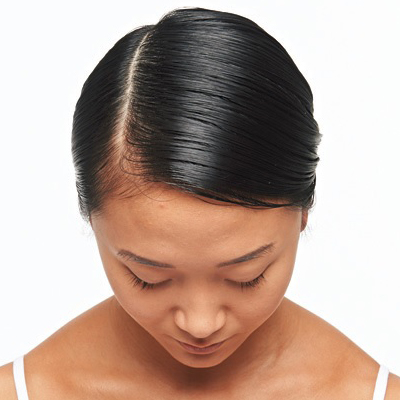
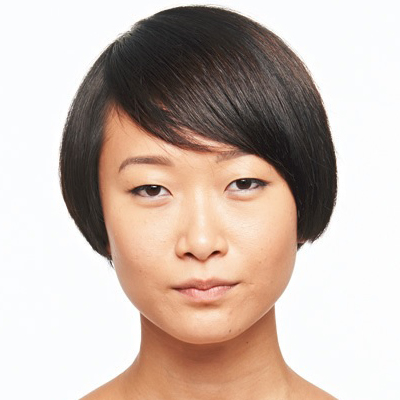
Take a low side parting (just above the temple area) that extends from the crown area to approximately the center nape area. Work with the natural growth patterns at the temple, crown and nape areas. Adjust the sectioning to suit the individual crown, growth pattern, hair density, hair type, facial features and overall desired design.
- 3Step 3 of 18
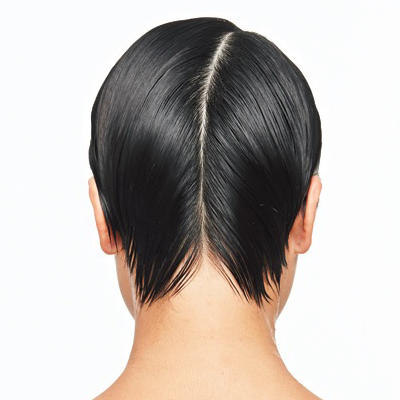
Starting at the front parting area, take a parting that extends from the temple area to the crown area (holding the hair at an approximately 90-degree angle) and cut to the desired length. The objective is to create a flat, neat head shape.
- 4Step 4 of 18
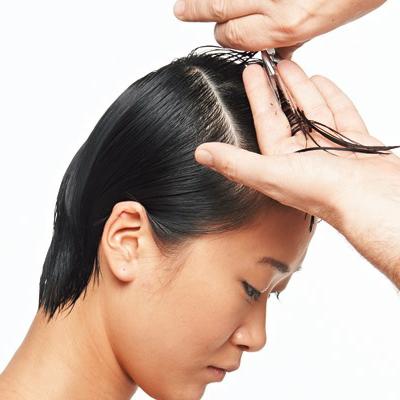
Continue to pivot off the first guide, working around the natural head using a traveling guide.
- 5Step 5 of 18
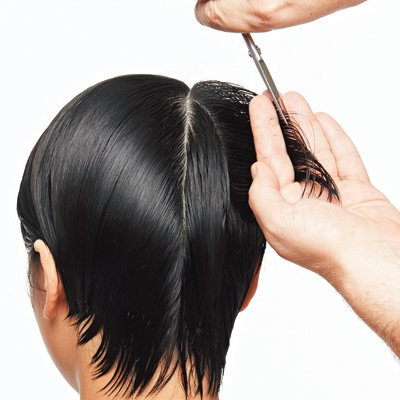
Continue working in the same manner, working with the natural growth pattern. Ensure that the nape area length is fitted and head-hugging.
- 6Step 6 of 18
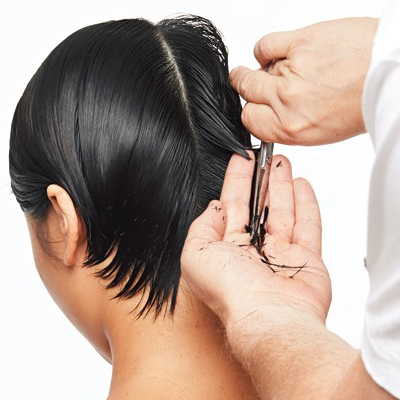
View of head shape and overall length. Note that the nape area will be refined when the hair is dry for ultimate control.
- 7Step 7 of 18
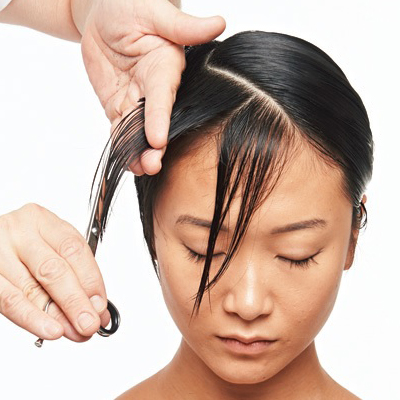
Take a diagonal parting that extends from the parting area out toward the opposite side (front fringe area), and connect this area to the underneath length (model’s right side). Elevate and overdirect each parting to avoid a heavy line. Tips: Elevating each parting slightly higher than the previous parting will bevel the hair and create a neat, seamless silhouette. Overdirection will help maintain length throughout the fringe area.
- 8Step 8 of 18
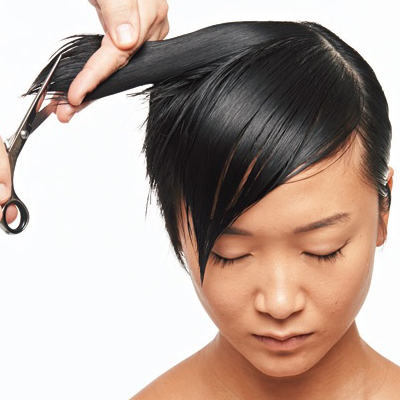
View of completed side and front fringe areas.
- 9Step 9 of 18
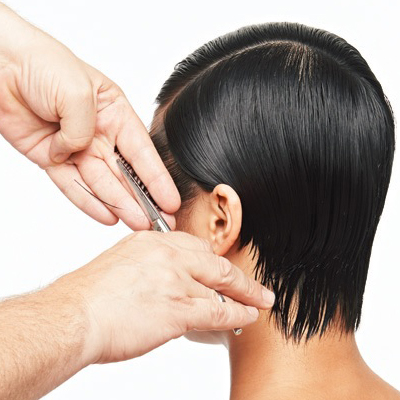
Take a diagonal parting that extends from the crown area and continues out to the temple area. Pay particular attention to the crown area; sectioning should be adjusted to suit the natural growth pattern. Take a diagonal parting at the temple area and cut to desired length. Note that this side is longer than the opposite side to create an asymmetrical design both in length and weight distribution. Alternatively, the shape can be cut symmetrically on both sides if desired.
- 10Step 10 of 18
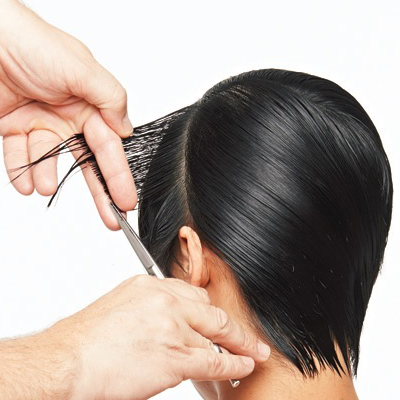
Continue using a traveling guide, working around the head shape taking diagonal partings.
- 11Step 11 of 18
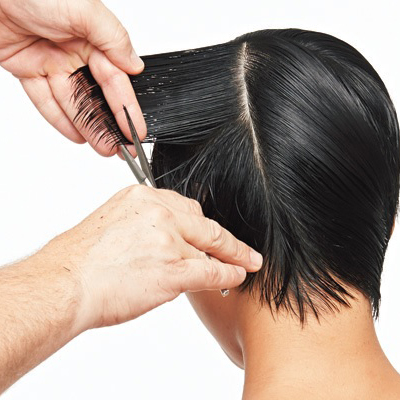
Continue taking diagonal partings to incorporate the side and nape areas. Note that the model’s left side partings are progressively overdirected to build a heavier weight area. The back nape area is longer and heavier than the opposite side and does not connect to the center back. The left and right nape areas are non-connecting; one side is lighter and flatter while the other is heavier and fuller.
- 12Step 12 of 18
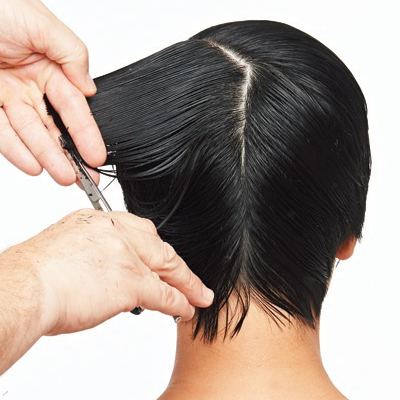
View of last parting. Adjust the degree of overdirection to suit the individual head shape, hair density and hairline growth pattern. Alternatively, the back area can be cut symmetrically. Note that all hairlines and growth patterns are slightly different, so always work to enhance the natural growth pattern and not against it. Blow-dry hair with a Denman brush, allowing hair to fall naturally.
- 13Step 13 of 18
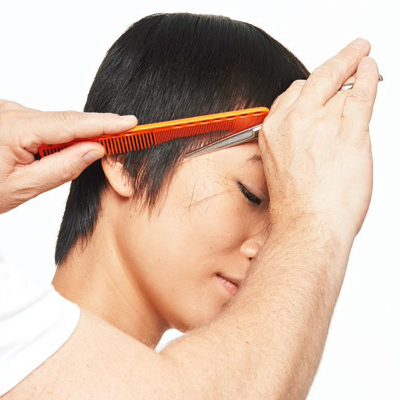
Refine the temple and fringe areas. Use a chipping and pointing technique to open the temple area and expose the eyes and cheekbones. Elevate the partings to create a softer feel to the edges of the hair.
- 14Step 14 of 18
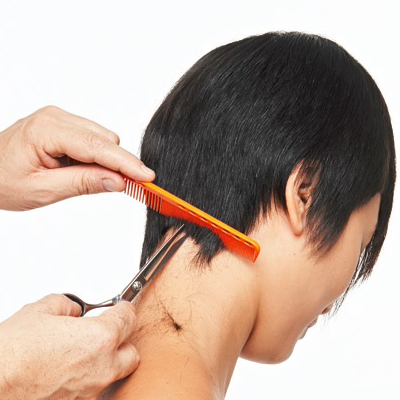
Refine the length in the nape area by point-cutting and chipping. Work with the natural growth pattern (square, asymmetrical, rounded, pointed, etc).
- 15Step 15 of 18
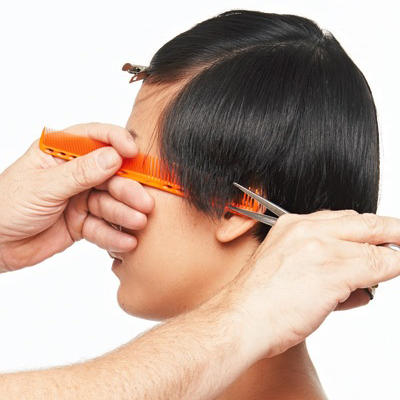
Refine the heavier, fuller side area using scissor-over-comb—hair should fade softly from shorter to longer. Note that this area clears the top of the ear and does not connect to the top area.
- 16Step 16 of 18
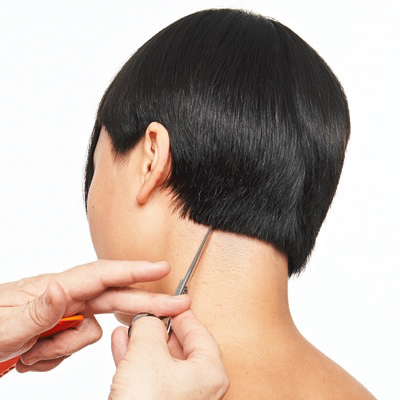
Refine the nape area by point-cutting and chipping to create a head-hugging shape.
- 17Step 17 of 18
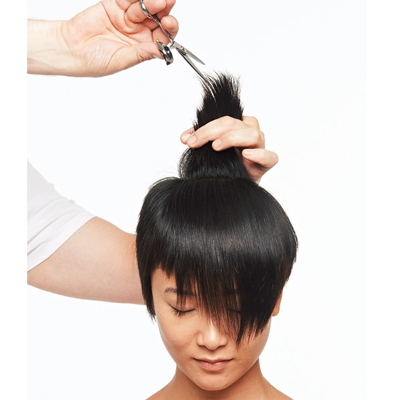
Cross-check and lightly point cut to refine excess weight, but keep the areas disconnected. Point-cutting ensures fluidity between the long and short areas. Note the different zones of disconnected lengths. Further refine hair after the color process to ensure the haircut and color flow seamlessly.
- 18Step 18 of 18
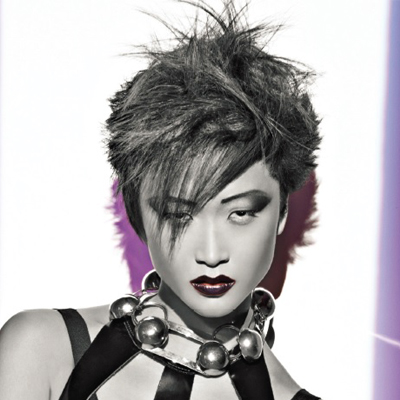
Haircuts
Long, Disconnected Pixie From Joico
January 19, 2014·1 min read
It seems like everyone in Hollywood is suddenly going pixie crazy! Everyday, more and more celebs are chopping their long locks in favor of this cute, yet hip pixie cut. This long, disconnected pixie is soft, yet edgy, with a feminine look to it. After more than two decades of subtlety and minimalism, In-Excess, Joico‘s new trend collection, heralds a return to the extravagance of the 1980s. But rather than reproduce the past, Joico International Artistic Directors Damien Carney and Sue Pemberton did as many fashion designers did for their spring 2014 collections and cleverly reinvented the most defining trends (more…)
More to Read