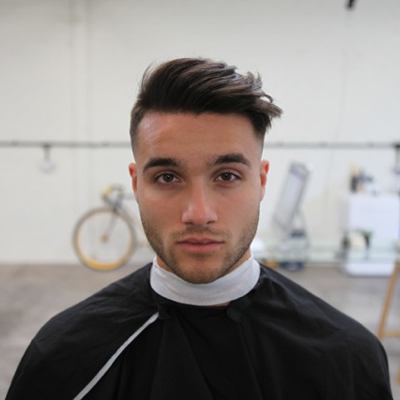
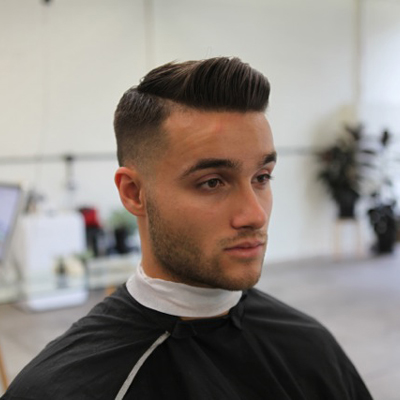
Men’s haircuts are incredibly simple in that they often look their best one way. This classic crop fade utilizes clipper-over-comb, layering, graduation and fading techniques to create leaner, flatter sides and a taller, more edgy top. Here’s BTC Member Rob Mason uses loose texture on the interior to create cleaner edges in his refined men’s cut. Who did itHair: Rob Mason, MORRIS MOTLEY, Melbourne, Australia.Learn how-to create a Men’s Prohibition Undercut from Rob! Check out Rob’s Men’s Clipper/Skin Fade!Check out more of Rob’s work on Instragram #morrismotley! Get even more tips and tricks from Schorem founders Leen and Bertus! (more…)
- 1Step 1 of 32
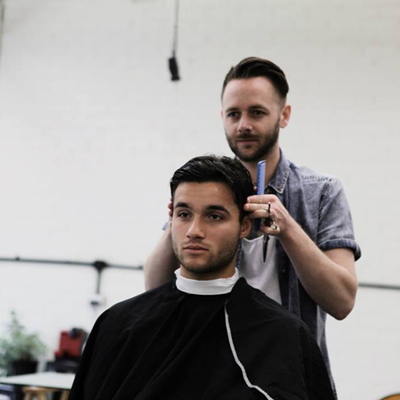 When you consult with a new client, it's important to check the bone structure, especially on the sides of the head. It is also CRUCIAL to understand what's there BEFORE you start cutting.
 - 2Step 2 of 32
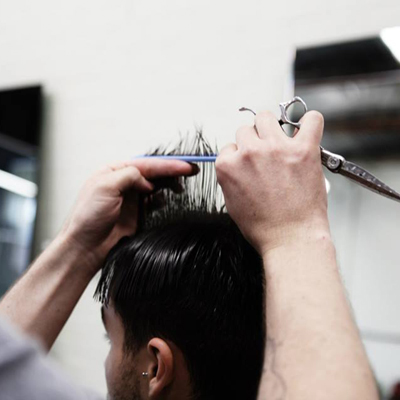 Generally speaking for shorter hair, men's haircuts start at the top and work downward to slim the shape, where as for women, you start at the bottom and work up to build the shape.
 - 3Step 3 of 32
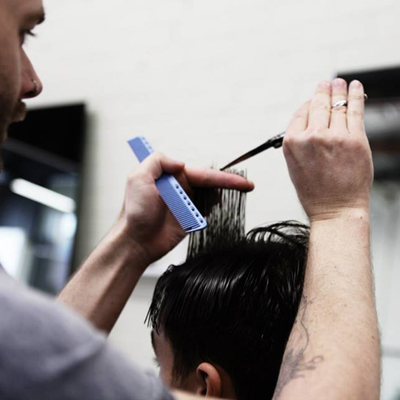 Beginning at the fringe, take a center parting pulling straight up and point-cutting. Starting at the front dictates how much length you will need to leave. If you work from the crown forward it's hard to know where the length will end up.
 - 4Step 4 of 32
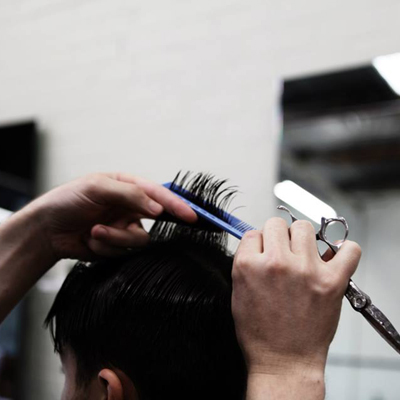 As you work toward the crown, start to angle your guide downward to slim the crown area down. Always keep your desired shape in mind.
 - 5Step 5 of 32
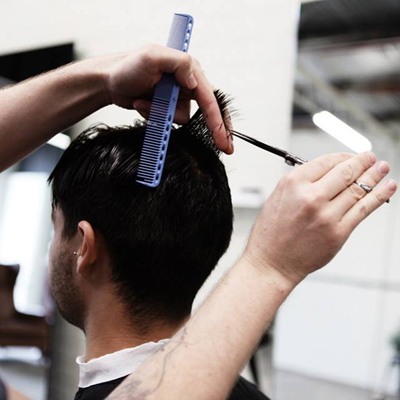 Keep angling the crown area downward toward the nape. Note: Rob's cutting arm should be higher, but the camera got in the way!
 - 6Step 6 of 32
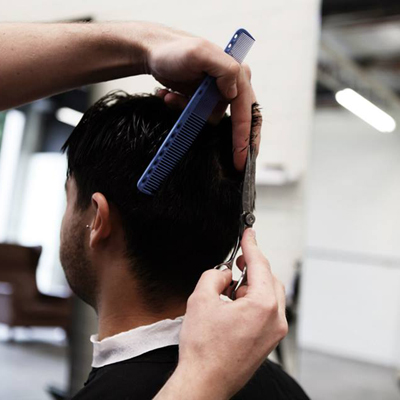 Continue slimming the shape into the back with vertical layering.
 - 7Step 7 of 32
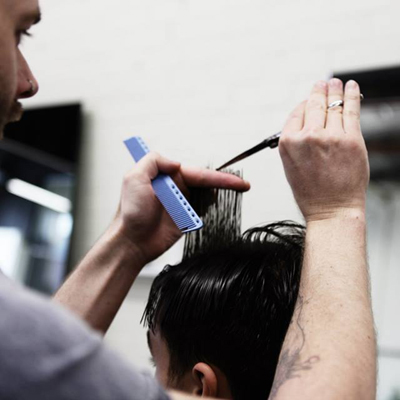 Return to the fringe area and take a parallel section to the initial guide, this time overdirecting toward the first section. You are essentially creating a square layer.
 - 8Step 8 of 32
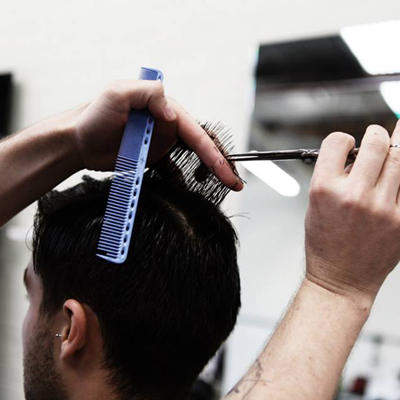 Repeat on the opposite side, overdirecting to the center.
 - 9Step 9 of 32
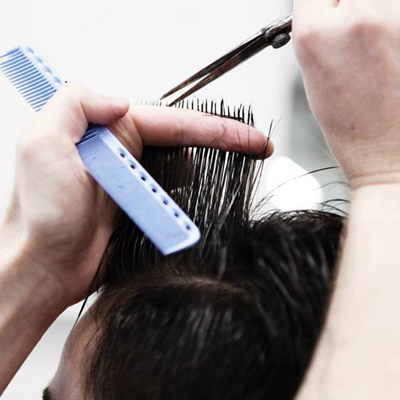
- 10Step 10 of 32
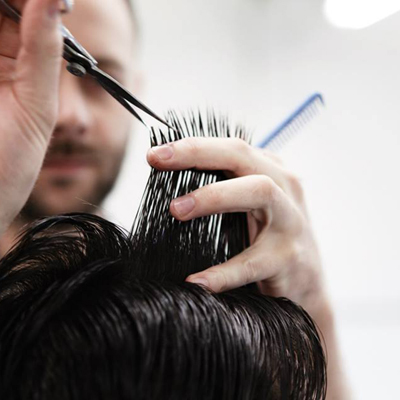 Rob is distorting the section to create more texture. He is not too keen on thinning scissors, razors or slicing, so he likes to use other techniques first to create texture.
 - 11Step 11 of 32
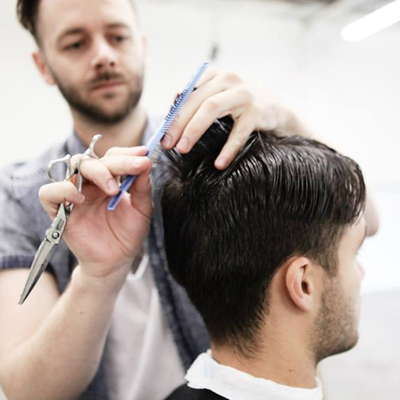 The interior is all layered the same way, overdirect into the center and point-cut following the same angles.
 - 12Step 12 of 32
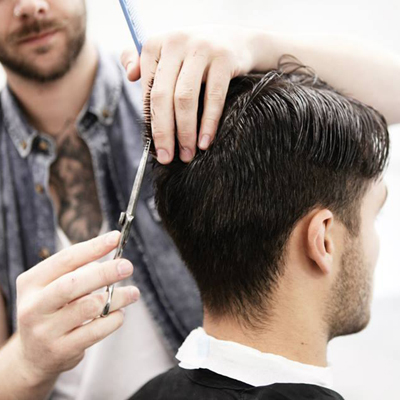
- 13Step 13 of 32
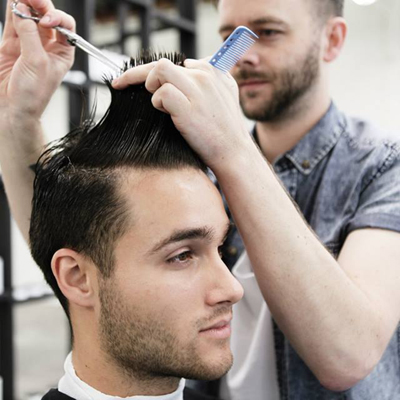 Gather the hair into the center to check the length.
 - 14Step 14 of 32
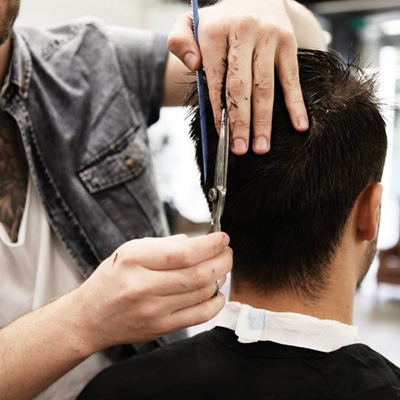 Try to keep your elbows high to cut this section, as this will help keep the hand angling the hair into the nape.
 - 15Step 15 of 32
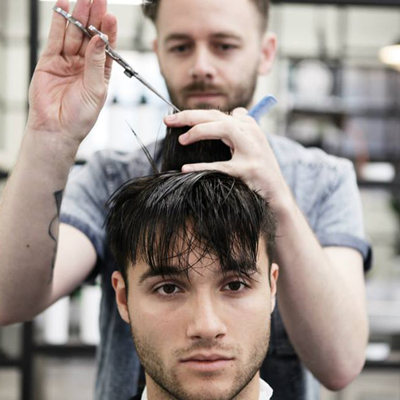 Once you finish layering the interior, vertically cross check the sections horizontally. The result from the overdirection should be a square layer.
 - 16Step 16 of 32
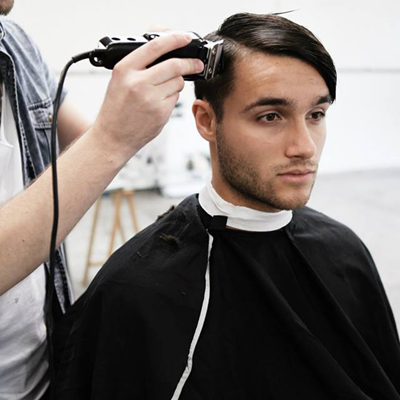 After you establish the length for the interior, section out at the recession area and begin placing your guide in for clipper-over-comb. It is important to start at the top and work downward, so you can flatten the shape quickly and easily on the sides.
 - 17Step 17 of 32
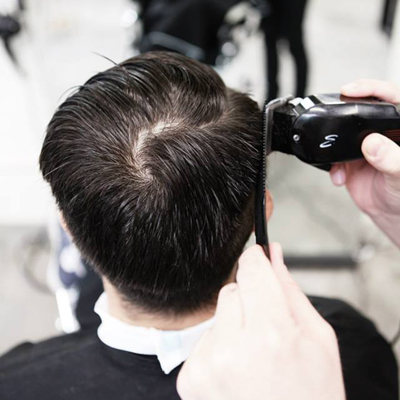 Not cutting the crown area too short will help avoid growth patterns. Repeat the clipper-over-comb guideline on the opposite side, ignoring the underneath length.
 - 18Step 18 of 32
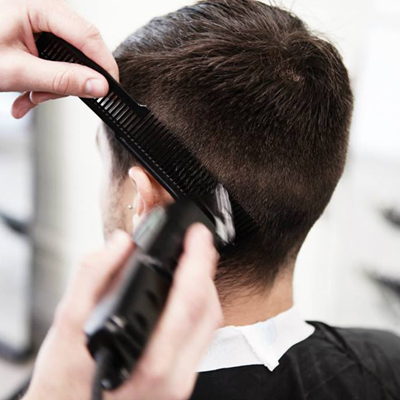 Once you are happy with your guideline, begin removing all excess hair underneath the guideline in preparation for the fade. This may seem complicated, but once you're comfortable with clipper-over-comb, the whole process takes about two minutes! Clipper-over-comb allows you to control the bone structure while you are working, flattening areas tighter where they need to be. Shaving it all off will only expose the bones, and you will not be able to manipulate them the way you want unless the client is happy for you to go shorter and shorter!
 - 19Step 19 of 32
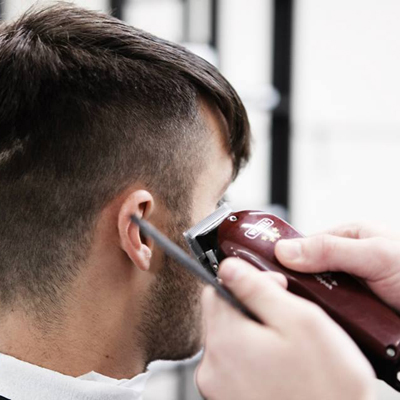 Once you have removed all unnecessary hair, you can begin to set up your fade. For his client, Rob only wanted a hint, as this looks cleaner and grows out better without being too intimidating for the client who is not ready to go all the way to a bald fade! Create a guideline through the temple area with a balding clipper.
 - 20Step 20 of 32
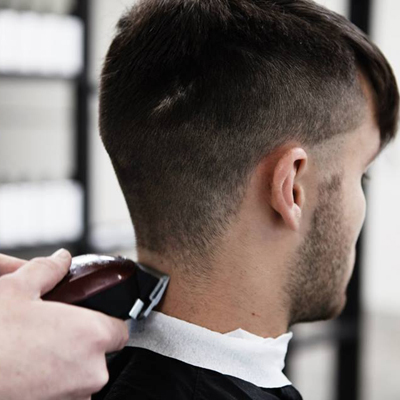 Create a guideline at the back.
 - 21Step 21 of 32
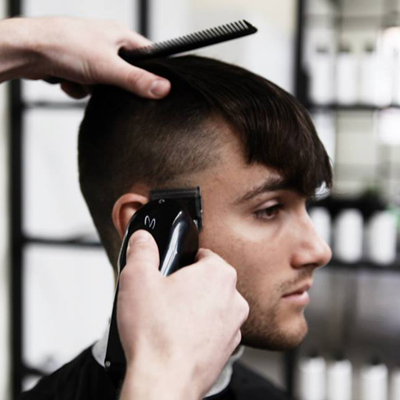 Switch to a normal clipper and use the #5 blade to begin softening the line. Use short, sharp, fast movements as opposed to big, scooping actions. This won't remove the line, only a 0 blade will. Rob fluctuates with the taper lever between the #5 and 0 to remove the balding clipper guideline. It won't take too long, and you'll end up with a nice balanced fade that doesn't go halfway up the head.
 - 22Step 22 of 32
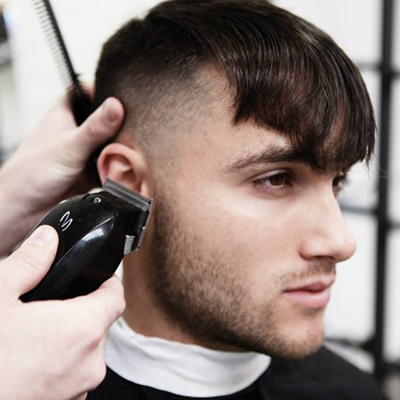 Another really important detail is to reverse fade into the beard area, there is nothing worse than a clean fade with a snap on beard! The finished result should look like the above image, just a hint of skin throughout the temple area, nothing too invasive!
 - 23Step 23 of 32
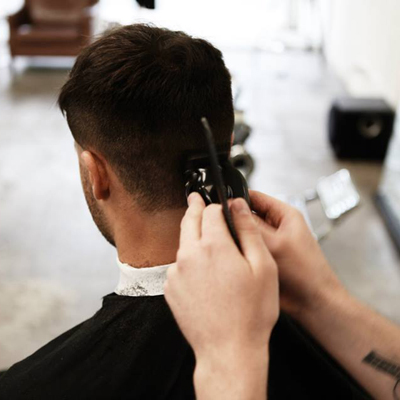 Begin the same process at the nape guideline...starting with the #5 blade first and fluctuating between the #5 and 0 to remove the line.
 - 24Step 24 of 32
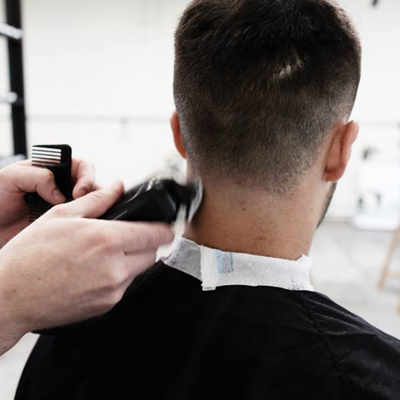 You will notice as the line disappears that even though it is tight in the back, it is really only the last inch that fades down, not half the head! Tip: You will need to use multiple angles to erase the fade guideline.
 - 25Step 25 of 32
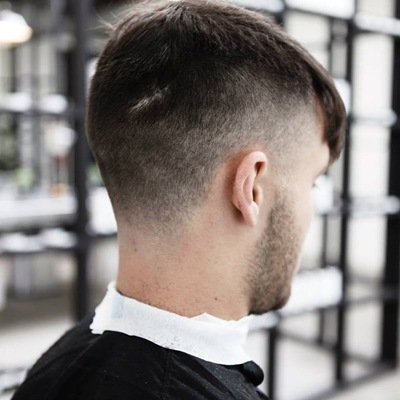 Here is the finished result of the faded area. Clean edges that don't go too high into the head, and aid the cut to grow out nicer. Repeat the same process on the opposite side.
 - 26Step 26 of 32
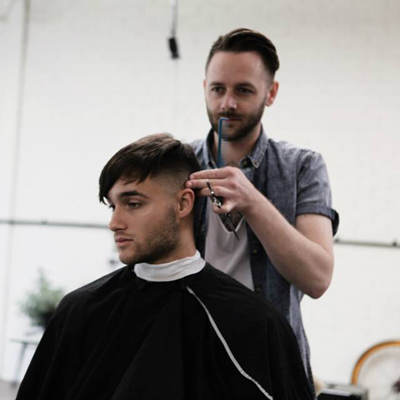 Its IMPERATIVE to look at your fade from afar. Use the mirror throughout the whole cut to keep everything in line. Because the cut is heavily asymmetric from right to left, you don't want the disconnection to fall over the back of the head so you will need to join the corner in and begin the disconnection from the ear forward.
 - 27Step 27 of 32
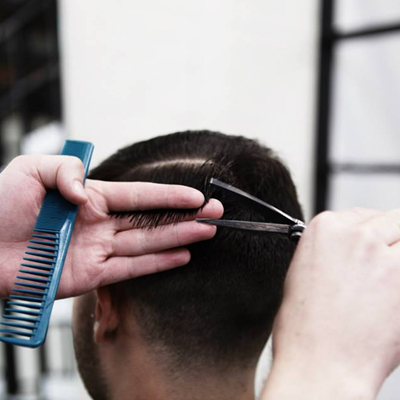 Overdirect to a stationary guide at the crown. Repeat until there is no more hair. Because you have already layered the interior, there won't be too much to cut. When you are finished you should be able to see how the crown blends from shorter to longer into the disconnected lengths in the fringe area.
 - 28Step 28 of 32
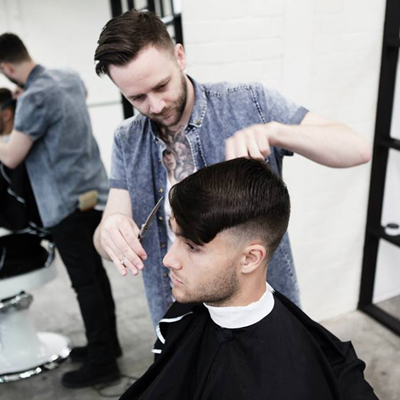 Using a scissor-over comb technique, refine the crown area and sides.
 - 29Step 29 of 32
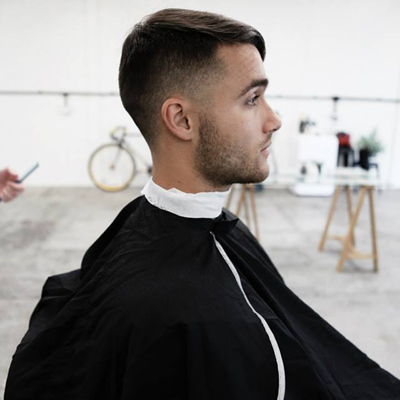 The finished result before styling. Notice how the haircut compliments Rob's client's bone structure rather than fight it. To style, use your hands to rake comb through the hair and blow-dry to add natural volume.
 - 30Step 30 of 32
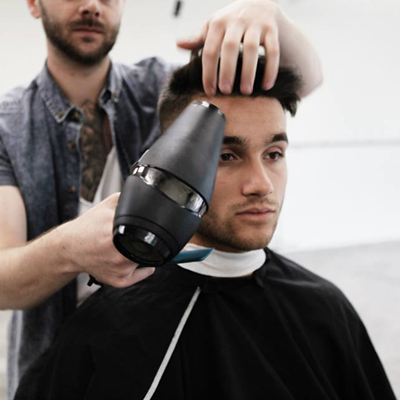
Always blow-dry the hair into the shape you want, not just because you want the hair dried quickly. To give the hair added texture, Rob applied Morris Motley Treatment Styling Balm and broke the hair up with his hands.
- 31Step 31 of 32
- 32Step 32 of 32